Human Cell Cleanup: Cellular Damage Control with Autophagy and Mitophagy
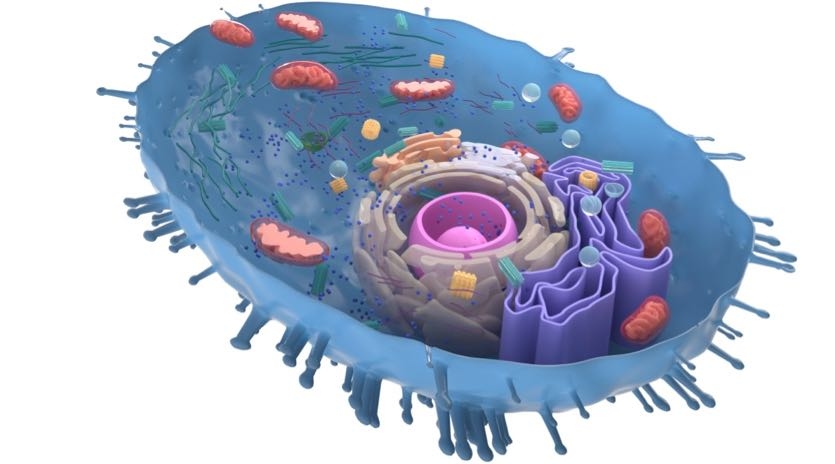
Your body can’t wait for a specific cleaning day to roll around. It’s constantly repairing, maintaining, and recycling. That happens on a large scale with life-essential proteins everywhere in your body. And that continual cycle happens in each human cell, because they all do their own form of cellular damage control, too. Two of the most important cleanup processes are autophagy and mitophagy.
So, let’s figure out why these cleaning processes are important. Then talk about how your cells deal with recycling, renewing, and dealing with cell damage and cellular cleanup.
Why Cell Cleanup is Good for Your Overall Health
So many proteins are essential to your life. But amongst the diversity, there is something that’s common. They all must be broken down after fulfilling their assigned tasks. Whether the protein is a liver enzyme, cellular structural support, or a protein protecting your body as part of the immune system, they all eventually become old and have to go.
This normal cellular-quality-control process helps maintain your overall physical wellness. It helps keep you cranking through your daily tasks, enjoying adventures, and generally living your best life.
But if the body’s housekeeping operations are stalled or inefficient, the results can be disastrous. Research has revealed how imbalances between protein production and degradation (another word for breakdown) can lead to accumulations of protein products. And these accumulations have been linked to declining brain health and can adversely affect many other systems in your body.
How Autophagy Helps with Recycling and Renewal
Before getting into the process of autophagy, let’s define what it is. The straight translation of autophagy is “self-eating,” which sounds bad. But it’s an important, normal part of a healthy body.
Basically, autophagy is the formal name for the recycling process your body’s cells go through. It’s where cells recycle damaged or used up parts into their most basic components. Then those small pieces can be reused.
It’s time for the deeper dive into the details of cellular cleanup.
During the process of autophagy, unwanted cellular elements are isolated and walled-off in specialized double-membraned compartments. (These are also known as autophagosomes.) The packaged protein “garbage” then fuses with lysosomes. The lysosomes are a type of cell organelle (or a cell structure) that has digestive enzymes to break down protein components. Recycling is completed when the broken-down protein’s amino acids become the raw material for new proteins.
Autophagy is happening all the time for all your cell structures. It’s a normal part of your cellular cleanup processes. But it also gets cranked up when your cells are stressed. Stressors include lifestyle factors, free radicals, and other sources. For example, calorie restriction is a common stressor connected to autophagy. The damage done from stress can’t be allowed to pile up. So, it makes sense that autophagy kicks into high gear in stressful times. When nutrients and energy are limited, cells increase autophagy to break down and recycle some of their own components. The resulting building blocks can then be reused to help support energy production and essential cellular functions.
What is Mitophagy?
Autophagy is a general term about the recycling process in many parts of the cell. Mitophagy is more specific. It refers to the same type of cleanup process for the mitochondria—the part of your cell responsible for energy production.
The mitochondria are the powerhouses of the cell that turn fuel into energy. When they are young and healthy, they are efficient at providing energy with few waste products (free radicals). As mitochondria age or wear out, they’re much less efficient at producing energy. And, in doing so, they give off much higher levels of free radicals.
You can liken this to the engine in a car. When the car is new, it’s efficient and gives off few emissions. As the car ages with use, the engine loses its efficiency and gives off far more emissions. At some point, the check engine light comes on. It indicates the engine may need to be overhauled or replaced for the car to continue to function optimally.
So, the process of mitophagy overhauls your cellular power plants to keep them churning efficiently and effectively. And normally functioning mitochondria play a big role in maintaining your health, vitality, and long-term wellness.
Signaling Cellular Cleanup
Cells don’t wait for damage to build up before starting autophagy. Basal autophagy (the steady background level of autophagy that runs under normal conditions) is always active, and its activity shifts as conditions change. Autophagy is also regulated rather than simply more-is-better, so the more useful question is what changes its activity.
Autophagy is tightly regulated because cells have to balance degradation and recycling with synthesis, growth, metabolism, and other cellular processes. Depending on the context, altered autophagy can have beneficial or detrimental consequences. Activity rises when cells face stress or limited nutrients.
Autophagy is a fundamental homeostatic process, and both basal and stress-responsive autophagy play important physiological roles. Researchers are studying whether specific dietary compounds can influence these pathways, though the evidence in humans is still developing.
Certain dietary compounds are being studied for their ability to influence cellular stress-response and nutrient-sensing pathways, some of which also regulate autophagy. Whether these compounds meaningfully affect autophagy in humans remains to be established.
Much of this work is preclinical, and its relevance to human health is not yet established.
Many of these stress-inducing nutrients are found in fruits and vegetables—broccoli, tomatoes, kale, turmeric root, grapes, and blueberries to name a few.