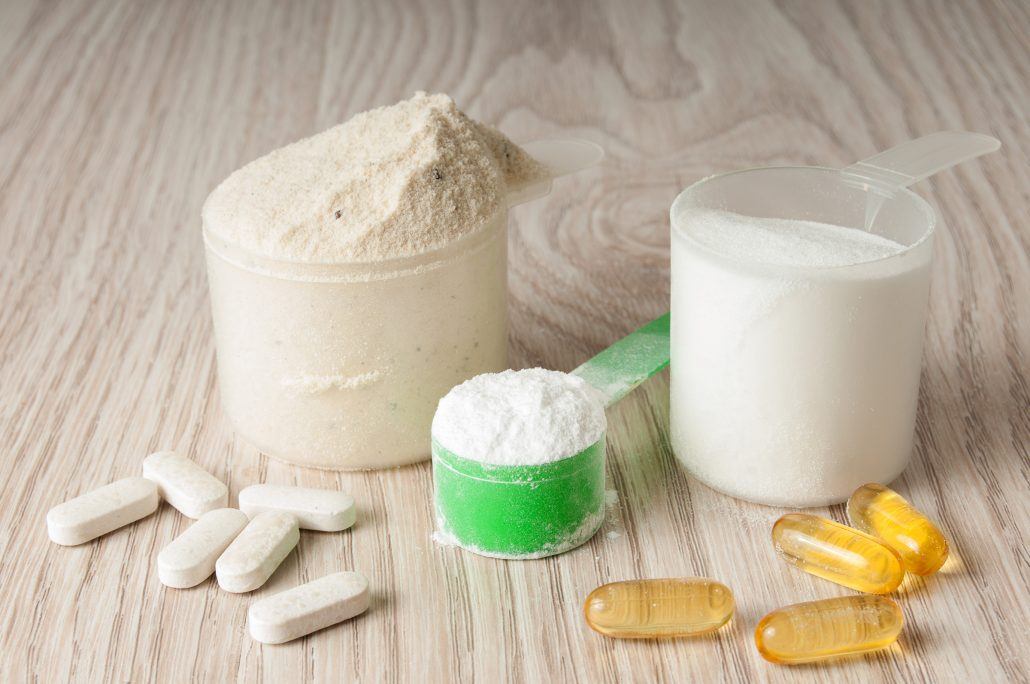
Creatine is one of the most widely studied nutrition supplements, but it is often misunderstood. Many people associate it only with bodybuilders or elite athletes. In reality, creatine is a naturally occurring compound your body uses to help produce quick energy, and it may be relevant not only for exercise performance but also for healthy aging and recovery. The key question is not just what creatine is, but who may benefit from it and under what circumstances.

What is Creatine?

Creatine is a naturally occurring compound made from three amino acids: arginine, glycine, and methionine. Your liver, kidneys, and pancreas produce creatine, and most of it is then transported to skeletal muscle, where it is stored for energy use. Smaller amounts are also found in the brain and other tissues. Creatine is present in foods such as red meat and seafood, which is why people who eat little or no animal protein may start with lower creatine stores.

How Creatine Works

Inside muscle cells, some creatine is converted to phosphocreatine (also called creatine phosphate). Phosphocreatine helps rapidly regenerate adenosine triphosphate (ATP), the body’s immediate energy source, during very short, high-intensity efforts. This system is especially important for activities that rely on brief bursts of power, such as sprinting, jumping, or lifting weights. Because of this role, creatine supplementation is most consistently linked to improved performance in repeated bouts of high-intensity exercise rather than endurance exercise.

Common Uses and Benefits

Creatine is best known for its role in sports nutrition, but research is also examining how it may support health in other populations. The strongest evidence supports exercise performance and muscle-related benefits, while evidence for brain health and other emerging uses is promising but still developing. Examples include:

  • Creatine can improve performance during repeated short bursts of high-intensity exercise, such as sprinting and resistance training.
  • When paired with resistance training, creatine can support gains in muscle strength and lean mass.
  • Some studies suggest creatine may help with training recovery and rehabilitation, but this area is still being studied.
  • In older adults, creatine combined with resistance exercise may help improve strength and physical function; evidence for bone mineral density is less consistent.
  • Because creatine is also stored in the brain, researchers are investigating possible effects on memory and cognition, especially in older adults and in situations of metabolic stress, but the evidence is not yet definitive.
  • Interest is growing in whether creatine may help support health during midlife and aging, including in postmenopausal adults, though more high-quality studies are needed before firm conclusions can be made.

Overall, creatine has a strong evidence base for improving high-intensity exercise performance and supporting strength gains with training. Other possible benefits are active areas of research, but they should be described carefully until more evidence is available.

Dietary Sources vs. Supplements

Creatine is found naturally in red meat and seafood, but food sources generally provide modest amounts. Supplements may be especially appealing to vegetarians or vegans, who often consume very little dietary creatine. Most supplements use creatine monohydrate, the form with the strongest evidence for effectiveness and safety. For people who choose to supplement, a common maintenance approach is 3 to 5 grams per day. Some people use a short “loading phase” followed by a maintenance dose, but loading is not necessary for most people because muscle stores will still increase over time with consistent daily intake.

Safety and Side Effects

Creatine is generally considered safe for healthy individuals when taken as directed, and creatine monohydrate is the form studied most extensively. Common side effects can include temporary water retention, bloating, or mild stomach discomfort, especially if large doses are taken at once.

Current research does not support the idea that creatine harms kidney function in healthy people, although it can raise blood creatinine levels, which may complicate interpretation of some lab tests. People with kidney disease, liver disease, bipolar disorder, pregnancy or breastfeeding concerns, or other significant medical conditions should talk with a healthcare professional before using creatine.

Note: It is a good idea to consult a healthcare professional before starting any new supplement, especially if you take medications or have an underlying medical condition.

Who Uses Creatine?

Creatine is commonly used by athletes and fitness enthusiasts who participate in high-intensity activities such as sprinting, swimming, team sports, and weight training. It is also used by recreational exercisers who want support for strength or training capacity. Beyond sport, researchers and clinicians are increasingly interested in creatine for older adults, people recovering from injury, and other groups who may benefit from improved muscle function or greater resilience during periods of physical stress. Still, the reasons for using creatine can differ widely, and not everyone needs supplementation.

Creatine and Women’s Health

Interest in creatine has expanded beyond sports nutrition and into women’s health, particularly during midlife and aging. The strongest evidence still relates to exercise: creatine monohydrate can help support high-intensity training performance and, when paired with resistance training, may contribute to gains in strength and lean mass. These effects may be especially relevant around and after menopause, when age- and hormone-related changes can make it harder to maintain muscle and physical function. Research is also exploring whether creatine may support aspects of cognition or mental performance under metabolic stress, such as sleep deprivation, but this evidence is still emerging and should not be presented as a guaranteed benefit. Overall, creatine appears promising as one tool to support healthy aging in women, especially alongside strength training, but menopause-specific claims remain an active area of study rather than a settled conclusion.

Key Takeaways

Creatine is a well-researched supplement with clear benefits for short-duration, high-intensity exercise and for supporting strength gains when combined with resistance training. It is not a “magic” solution, and it works best alongside consistent training, adequate nutrition, and good recovery habits. For healthy individuals, creatine monohydrate appears safe when used appropriately. The most exciting newer research involves healthy aging, cognition, and recovery, but those areas still need stronger evidence before they can be presented as established benefits.
 

USANA does not produce or sell Human Growth Hormone supplements.

Human growth hormone (HGH), a substance secreted by the pituitary gland, promotes growth during childhood and adolescence. HGH therapy is useful for treating growth hormone deficiency in children and adults, and it may have other clinical uses.

Although growth hormone levels decline with age, there is no scientific evidence that maintaining HGH levels associated with youth is beneficial or even healthy. In fact, there are potential negative side effects associated with HGH therapy, including an increased risk for cancer, cardiovascular disease, and behavioral changes. Additionally, supplement companies cannot legally sell human growth hormone, so instead they market precursors (secretagogues) as dietary supplements, none of which currently have strong, scientifically-validated benefits.

Real HGH therapy requires a prescription and must be administered by a knowledgeable physician. It cannot simply be purchased through an MLM company, over the counter, or legally over the internet.

To maximize your health and growth hormone production it is important to receive adequate protein intake, participate in resistance training to improve muscle strength and function, maintain an adequate sleep cycle, and eat a healthy diet.

No USANA products currently contain policosanol.

Policosanol is an aliphatic alcohol (made from sugar cane wax) with HMG-CoA reductase properties purportedly similar to statin drugs. Unfortunately, properly done science on policosanol is inconclusive at the moment. As such, providing it in USANA supplements based solely on existing research would be premature.

USANA scientists will continue to monitor the science behind policosanol, and any product-related decisions will be based on the best available research.

USANA products do not currently contain pycnogenol.

The grape seed extract in Proflavanol C contains similar proanthocyandins to pycnogenol (plus other beneficial compounds pycnogenol may lack), while also being cleaner and more environmentally friendly to process and manufacture.

USANA products do not currently contain krill oil.

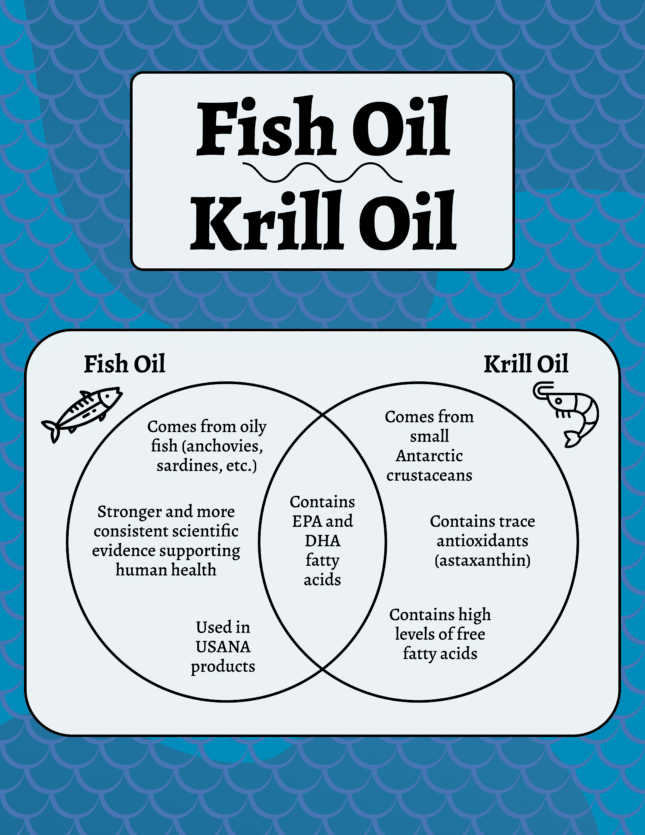
Both krill oil and fish oil are sources of omega-3 fatty acids and are used in dietary supplements. While they share this common role, they differ in source, composition, concentration, and cost, which can influence how they are evaluated.

  • Fish oil comes from oily fish (anchovies, sardines, etc.) and mainly provides EPA and DHA.
  • Krill oil comes from small Antarctic crustaceans and contains EPA, DHA, and an antioxidant (astaxanthin).
  • Both provide similar health benefits, including triglyceride reduction.

Although some arguments in favor of krill oil may sound persuasive, it does not measure up to a top-quality purified and concentrated fish oil. Fish oil offers the advantage of higher EPA and DHA levels per capsule at a much lower cost than to Krill oil.

Krill oil is much lower in DHA (9%) than USANA’s BiOmega product (23.5%), yet it is significantly more expensive to produce.

Based on purity, potency, concentration, availability, and cost, using fish oil as the omega-3 source in BiOmega is a great choice.

Frequently Asked Question

Question:

Is krill oil significantly more bioavailable than fish oil?

Answer:

Although krill oil contains phospholipidsstudies show only minor differences in absorption in comparison with fish oil and no meaningful clinical advantage.

Available evidence suggests only minor differences in absorption between krill oil and fish oil, with no statistically significant clinical advantage for krill oil. Any observed differences may be related more to free fatty acid content than to phospholipids.

One study suggested krill oil might raise blood omega-3 levels more effectively than fish oil, but the comparison used fish oil diluted with corn oil, which likely affected absorption. Results may have differed if a balanced fish oil such as BiOmega had been used. Overall, claims that krill oil is more bioavailable or provides superior benefits are not strongly supported by the evidence.

Ulven SM, Kirkhus B, Lamglait A, Basu S, Elind E, Haider T, Berge K, Vik H, Pedersen JI. Metabolic effects of krill oil are essentially similar to those of fish oil but at lower dose of EPA and DHA, in healthy volunteers. Lipids. 2011 Jan;46(1):37-46.

Question:

Is krill oil or fish oil better for supporting health?

Answer:

Fish oil has stronger and more consistent scientific evidence supporting its role in cardiovascular health. Well-designed clinical studies comparing krill oil and fish oil side-by-side are rare and have not clearly shown advantages of one over the other as such.

As a source of omega-3 fatty acids, krill can theoretically be beneficial for our health; however, there is no overwhelming proof that it is any better than fish oil. Quite the opposite. There is substantial evidence that fish oil is good for our health, while evidence for krill oil is scant.

PubMed, the US National Library of Medicine run by the National Institutes of Health, currently (as of 2 June 2026) lists 8,982 studies related to human health and fish oil, while only 145 studies are related to human health and krill oil.

Question:

Have USANA scientists looked into developing a krill oil supplement?

Answer:

Creating a better product than our current BiOmega would depend on optimizing formulation quality and delivering effective levels of EPA and DHA at a reasonable price. Purity and contamination concerns around fish oil are based on the extraction and formulation process, which could potentially apply to krill oil as well.

Until there is strong, consistent, and compelling scientific research supporting krill oil’s benefits, USANA remains confident in the quality and effectiveness of fish oil, which has ample proof for supporting good health.

Question:

What about the astaxanthin in krill oil?

Answer:

Krill oil contains astaxanthin, a red carotenoid antioxidant that helps neutralize free radicals. Astaxanthin offers antioxidant support similar to that of other well-known carotenoids, such as lycopene, beta carotene, and zeaxanthin. Omega-3 supplements containing astaxanthin may provide trace antioxidant support.

USANA® offers many products that are vegan or vegetarian friendly. You will find a list below that states which products are vegan, and if not, which animal by-products they contain.

Supplements

  • BiOmega: fish oil, capsule (gelatin), vitamin D (derived from lanolin)
  • Body Rox:  vitamin D (derived from lanolin)
  • Booster C 600: vegan
  • CellSentials Booster: vegan
  • CopaPrime+: vegan
  • Core Minerals: vegan
  • CoQuinone: capsule (gelatin)
  • Digestive Enzyme: vegan
  • EstroPro: vegan
  • Hepasil DTX: vegan
  • Iron: vegan
  • MagneCal D: vitamin D (derived from lanolin)
  • Marine Collagen Peptides: fish byproducts
  • Metabolism +: vegan
  • Palmetto Plus: capsule (gelatin)
  • Probiotic: vegan
  • Procosa: vegan
  • Proflavanol: vegan
  • Proglucamune: vegan
  • Pure Rest: vegan
  • Rest Complete: vegan
  • Stress Relief: vegan
  • Usanimals: milk calcium
  • Visionex: vegan
  • Vita Antioxidant: vitamin D (derived from lanolin)
  • Vitamin D: vitamin D (derived from lanolin)
  • Vitamin K2: vegan

Foods

  • Circulate+: vegan
  • Collagen Protein Bar: bovine collagen
  • Core Aminos: animal-based proteins
  • Fibergy Active: vegan
  • Detox Tea Mix: vegan
  • Dutch Chocolate Nutrimeal: whey protein, sodium caseinate (a milk derivative), and vitamin D (derived from lanolin)
  • Electrolyte Replacement Drink: vegan
  • French Vanilla Nutrimeal: sodium caseinate (a milk derivative) and vitamin D (derived from lanolin)
  • Nutrimeal Active: vitamin D (derived from lanolin), vitamin E acetate encapsulated with fish gelatin
  • Nutrimeal Free: vitamin D (derived from lanolin)
  • Peanut Butter Snack Bar: vegan
  • Rev3 Energy*: vegan
  • Rev3 Surge Pack: vegan
  • Revolve Fizzy Energy Drink Mix: vegan
  • Whey Protein Isolate: dairy

Skincare

  • All Celavive products are free of animal-derived ingredients.

*While some USANA Foods do not contain animal-derived ingredients, they may be processed on equipment that comes into contact with dairy ingredients or by-products.

USANA products are specifically formulated for humans. Although some might be appropriate for pets or animals, USANA scientists cannot make firm recommendations because our expertise is centered in human nutrition, not animal nutrition.

Optimal nutrient amounts vary greatly from species to species. For example, the only animals that require dietary vitamin C are humans, some primates, guinea pigs, bats, a few fish and some birds. Other animals are able to produce vitamin C endogenously, limiting the amount they need to obtain from dietary sources.

Simply put, there is no one-size-fits-all nutritional supplement for pets. If you would like to give USANA products to an animal, consult with a veterinarian to determine which products might be appropriate for a particular species.

Irradiation in the post office and x-rays at the airport will not significantly affect the quality of USANA products. The following is a statement from the U.S. Postal Service:

U.S. Postal Service position on irradiating the mail

“Following the terrorist attacks on the American public and postal employees through the mail, Postmaster General John Potter ordered extraordinary measures to ensure the security and safety of the mail.

As always, protecting the health and safety of our employees and the public is our top priority. The Postal Service will continue to take the lead and full responsibility for selecting and implementing the best technology available to carry out this task.

Among the measures being implemented is a process for irradiating the mail to destroy the presence of any biohazardous material. We are currently leasing irradiation facilities in Ohio and New Jersey to decontaminate mail.

We have issued contracts for future purchases of irradiation equipment and these contracts remain in place. We have said all along that irradiation will be used on targeted mail, not all mail, and that has not changed.

Recognizing the extraordinary expense these national security measures will take, the Postmaster General has testified before the Senate that the Postal Service would need $1.1 billion through June to implement full safety and security measures, including protective equipment for employees, detection and filtering equipment to be placed at our mail processing equipment, and irradiation and mail decontamination equipment.

We continue to utilize a variety of technologies and will use all methods that prove efficacious, safe, cost-effective, and are able to be integrated into our mail processing system. We are fully committed to detecting and removing biohazards from the mail. The safety of our employees and the public is paramount and we will do whatever it takes to ensure the security of the mail.”

USANA supports the U.S. Postal Service in taking these protective measures. Irradiation and x-rays will not significantly affect the potency of USANA products.

USANA does not manufacture or sell products that would alter the natural blood pH of your body. The acid-base balance of the body is kept in a tight state of equilibrium, and intentionally altering this balance could lead to serious illness or even death.

best supplement

best supplement

Determining the best supplement delivery system is difficult, because of the huge variety of options available. Common pill forms, popularized by the pharmaceutical industry, include tablets, hard capsules, and soft capsules. Other vitamin, mineral, and antioxidant supplements take the form of powders, lozenges, liquids, gels, and gummy vitamins.

Recently, even vitamin injections have become common. Technically, the U.S. Federal Drug Administration (FDA) considers injections to be drugs, not supplements, but we’ve included a discussion of them below.

Deciding what is the best supplement form, comes down to the active ingredient and the audience. Children, for example, need special consideration when designing a supplement. Most young kids are much happier eating a chewable, gel, or gummy vitamin. And they might struggle swallowing tablets. However, these kid-friendly forms need special planning and have some drawbacks compared to swallowed tablets or capsules.

Tablets and Capsules

A well-made tablet or capsule provides a very effective delivery system, making it the chosen form of most pharmaceutical medications. This is because years of carefully controlled clinical studies have confirmed they’re reliable, efficient delivery systems for medications.

These products can also provide an increased amount of active ingredient (much more than a liquid, gel, or gummy). This results in fewer excipients. An excipient, is an ingredient that does not serve an active nutritional purpose. They may be included for stability, digestibility, manufacturing, or other similar purposes.

In general, the stability and shelf-life of tablets are also superior to liquids or gummy vitamins.

Tablets and capsules are best used for vitamin, mineral, and antioxidant supplements that do not need large (> 2 grams) doses. Vitamin C, B vitamins, iron, iodine, etc., all have typical daily doses small enough to easily be included. Many of these nutrients also have a bad taste that can be difficult to hide in other forms.

Tablet and Capsule Pros:

  • Long shelf-life
  • Concentrated delivery of active ingredients (fewer excipients)
  • Hides bad tastes

Tablet and Capsule Cons:

  • Difficult for some to swallow
  • Not appropriate for large active ingredient doses

Chewable Tablets

Like other tablets, chewables are best used for ingredients only taken in smaller (< 2 grams) doses. They also share the benefit of a long shelf-life. Chewables may be the best supplement for those who have trouble swallowing whole tablets or capsules.

Because the tablets are chewed up, bad-tasting ingredients must be masked with sweeteners and flavorings. This limitation means chewable tablets typically have some sugar in them. Some chewable multi-vitamin, multi-mineral products are also missing essential minerals—like selenium, chromium, magnesium, and zinc—because it is hard to mask their flavors.

Chewable Tablet Pros:

  • Easy to consume
  • Long shelf-life

Chewable Tablet Cons:

  • Not as concentrated as swallowed tablets
  • May be missing key ingredients
  • Added sweeteners (although typically very small amounts)

Gummy Vitamins

Gummy vitamins, like chewable tablets, are much better tasting for children and those who have trouble swallowing tablets. Despite their taste, gummy vitamins are not candy and should not be taken beyond the recommended dosage.

They are even more limited than chewable tablets in what types of ingredients they can contain. Gummies often have very few minerals, and most essential minerals are usually absent. For the ingredients they do contain, doses are often much smaller, as well.

The best uses for gummy vitamins are typically select ingredients that are compatible with gummy vitamins, that only need to be taken in very small doses (< 100mg).

Gummy Pros:

  • Easy to consume
  • Great tasting

Gummy Cons:

  • Not compatible with many ingredients
  • Added sweeteners

Powders

Powders have the benefits of being easy to consume and can include larger doses (> 2 grams) of some nutrients. The active ingredients found in powdered supplements will be tasted, so they must either have a pleasant or easily masked flavor. They must also contain ingredients that are soluble in the liquid or are easy to shake up.

Protein powder is one of the most popular powdered supplements, and it is an ideal candidate for this delivery form. Protein delivery requires doses too large for a tablet or capsule, it is easy to make taste good, and mixes easily with water.

Other ingredients that are commonly found in powdered mixes are branched chain amino acids (BCAAs), creatine, and caffeine. Immune-boosting formulas are also commonly found in stick packs, which can easily mix with water.

Powder Pros:

  • Inexpensive to transport
  • Can include large doses of active ingredients

Powder Cons:

  • Less concentrated active ingredients (more excipients)
  • Added sweeteners and excipients

Liquids

Liquid supplements generally have the same types of ingredients, benefits, and drawbacks as powdered supplements. The one difference is they are already mixed with a liquid.

Liquid supplements are best for ingredients often found in powders, like protein, branched chain amino acids (BCAAs), creatine, and caffeine. Micronutrients often found in liquid supplements include most vitamins and minerals, and other antioxidants.

Since they are already mixed, liquid supplements typically have a shorter shelf-life than their powdered equivalent. Liquid supplements may also require many more “other” ingredients. This includes emulsifiers, solvents, preservatives, stabilizing agents, coloring, flavoring, and more.

Liquids Pros:

  • More convenient than mixing powders
  • Can include large doses of active ingredients

Liquids Cons:

  • More expensive and difficult to transport
  • Difficult to add non-soluble ingredients
  • Less concentrated active ingredients (more excipients)
  • Added sweeteners and excipients
  • Often a shorter shelf-life

Vitamin Injections

Certain vitamins can be injected intravenously (IV) or by intramuscular injections. Injections are a great option for delivering select nutrients in large doses. Vitamin B12 is one nutrient that has shown therapeutic benefits in some populations.

One concern with injections is that many nutrients are not safe to inject. Of those that are safe to inject, very few of them offer extra measurable benefits to the average person over eating the nutrient. Because of this, injections should only be given under a doctor’s recommendation.

Injections also bring additional risk factors. At the very least they can be uncomfortable. IVs also pose a risk of infection, bleeding (hematoma), embolism, and more.

Vitamin Injection Pros:

  • Can deliver high-doses of select nutrients

Vitamin Injection Cons:

  • Limited nutrient compatibility
  • Uncomfortable
  • Potential health risks

So, What is the Best Supplement Form?

The large variety of supplement forms have their own benefits and downsides. Ultimately, the best supplement form will depend on you and your individual needs. It also depends on the active ingredients you need, and individual preferences for swallowing tablets, taste, and convenience. Special medical needs may also determine the form a doctor recommends.

The best advice when deciding the best supplement is to consider all the factors listed above. Do the pros outweigh the cons? Is the form being used for its real benefits, or is it just a marketing tactic to be different?