Rev3 Energy Surge Pack
What You Need to Know
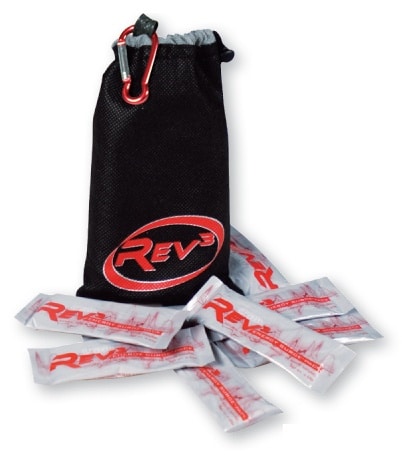
Experience the energizing benefits of Rev3 Energy in a convenient, ready-to-mix pack. The Rev3 Energy Surge Pack is perfect to take with you wherever you go. Simply mix with a bottle of water and enjoy this fresh, scientifically formulated alternative to the typical energy drink.
What Makes it Work?
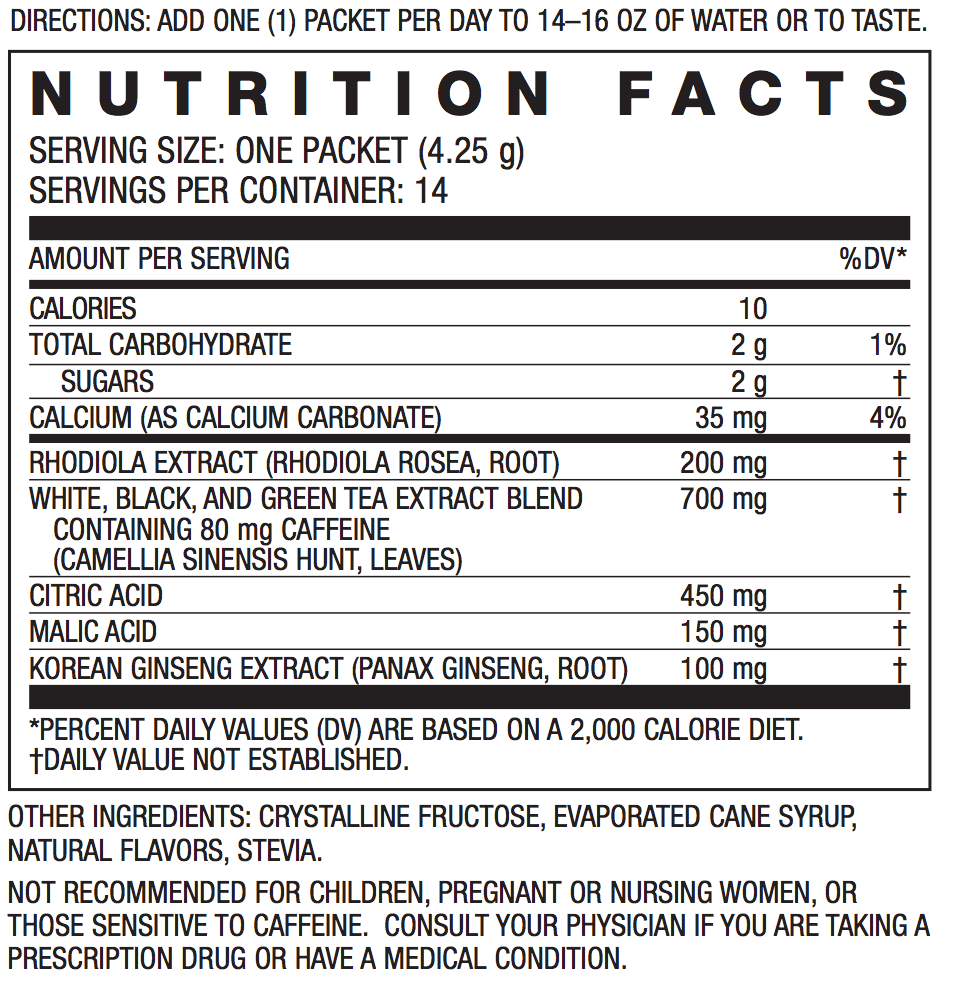
Rev3 Energy Surge Pack contains a natural source of caffeine derived from the leaves of three different types of teas. With 80 mg of naturally derived caffeine, Rev3 Energy Surge Pack contains about as much caffeine as an average cup of coffee, but without many of the potentially harmful ingredients, such as large amounts of sugar, excessive calories, or artificial preservatives.
The Energy Complex
Malic acid and citric acid are part of Rev3 Energy Surge Pack’s complete energy complex. These ingredients are broken down and eventually enter the Krebs cycle (citric acid cycle) and electron transport chain where they help refuel the body’s energy stores.
The USANA Difference
Rev3 Energy Surge Pack has no artificial flavors, no artificial sweeteners, no artificial preservatives, and no artificial colors. It contains naturally derived caffeine from a blend of teas for improved mental alertness and stamina. Teas also provide numerous beneficial ingredients, including a thermogenic agent to aid in energy production, and antioxidants and phytonutrients known to be beneficial to health and metabolism.*
References
March, J., & Brown, W. H. (2018, August 21). Carboxylic acid. Retrieved from https://www.britannica.com/science/carboxylic-acid
Kim, H. G., Yoo, S. R., Park, H. J., Lee, N. H., Shin, J. W., Sathyanath, R., … & Son, C. G. (2011). Antioxidant effects of Panax ginseng CA Meyer in healthy subjects: a randomized, placebo-controlled clinical trial. Food and Chemical Toxicology, 49(9), 2229-2235.
Etemadifar, M., Sayahi, F., Abtahi, S. H., Shemshaki, H., Dorooshi, G. A., Goodarzi, M., … & Fereidan-Esfahani, M. (2013). Ginseng in the treatment of fatigue in multiple sclerosis: a randomized, placebo-controlled, double-blind pilot study. International Journal of Neuroscience, 123(7), 480-486.
Kim, H. G., Cho, J. H., Yoo, S. R., Lee, J. S., Han, J. M., Lee, N. H., … & Son, C. G. (2013). Antifatigue effects of Panax ginseng CA Meyer: a randomised, double-blind, placebo-controlled trial. PloS one, 8(4), e61271.
Hong, M., Lee, Y. H., Kim, S., Suk, K. T., Bang, C. S., Yoon, J. H., … & Kim, M. J. (2016). Anti-inflammatory and antifatigue effect of Korean Red Ginseng in patients with nonalcoholic fatty liver disease. Journal of ginseng research, 40(3), 203-210.
Ota, N., Soga, S., & Shimotoyodome, A. (2016). Daily consumption of tea catechins improves aerobic capacity in healthy male adults: a randomized double-blind, placebo-controlled, crossover trial. Bioscience, biotechnology, and biochemistry, 80(12), 2412-2417.
Schmidt, A., Hammann, F., Wölnerhanssen, B., Meyer-Gerspach, A. C., Drewe, J., Beglinger, C., & Borgwardt, S. (2014). Green tea extract enhances parieto-frontal connectivity during working memory processing. Psychopharmacology, 231(19), 3879-3888.
March, J., & Brown, W. H. (2018, August 21). Carboxylic acid. Retrieved from https://www.britannica.com/science/carboxylic-acid